My Coral Reef Low Voltage Electrolytic Cell Aquarium Build

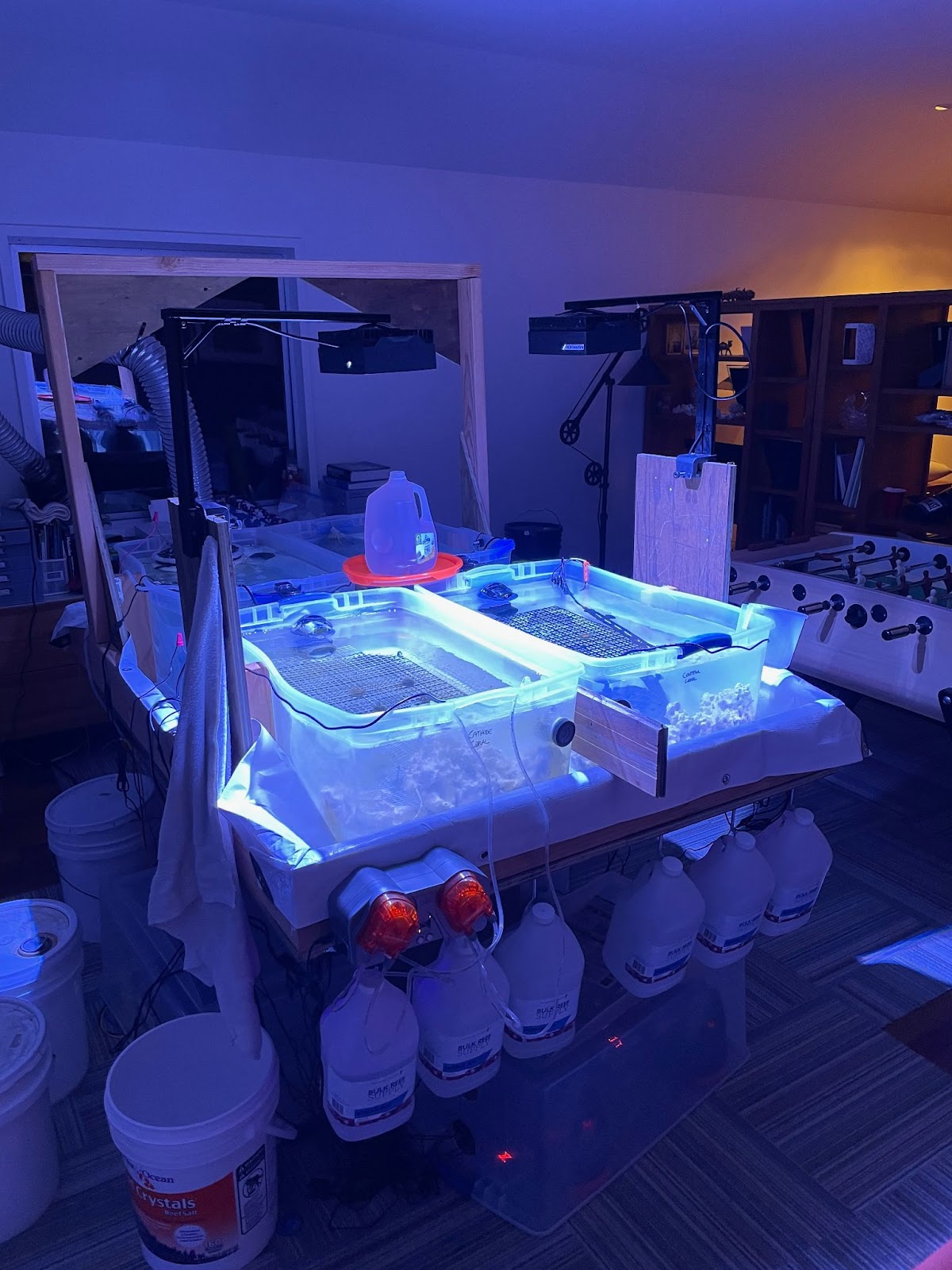
My experimental tanks are up and running, with the first few pioneering corals still alive after several weeks. Here’s a quick photo recap of the build process from the past few months.
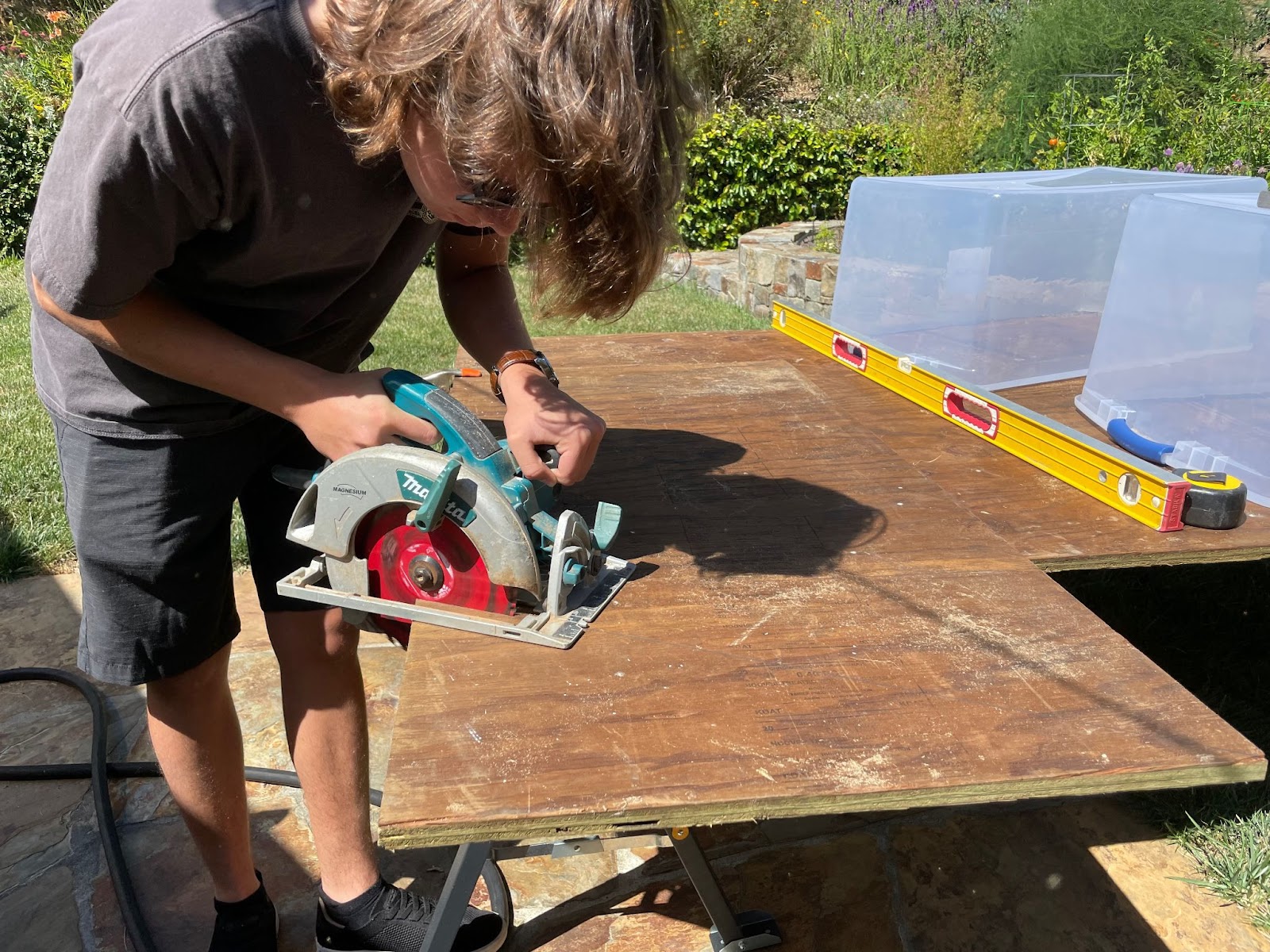
All invented experimental apparatuses need a solid foundation. Mine is made from 3/4″ pressure-treated plywood.
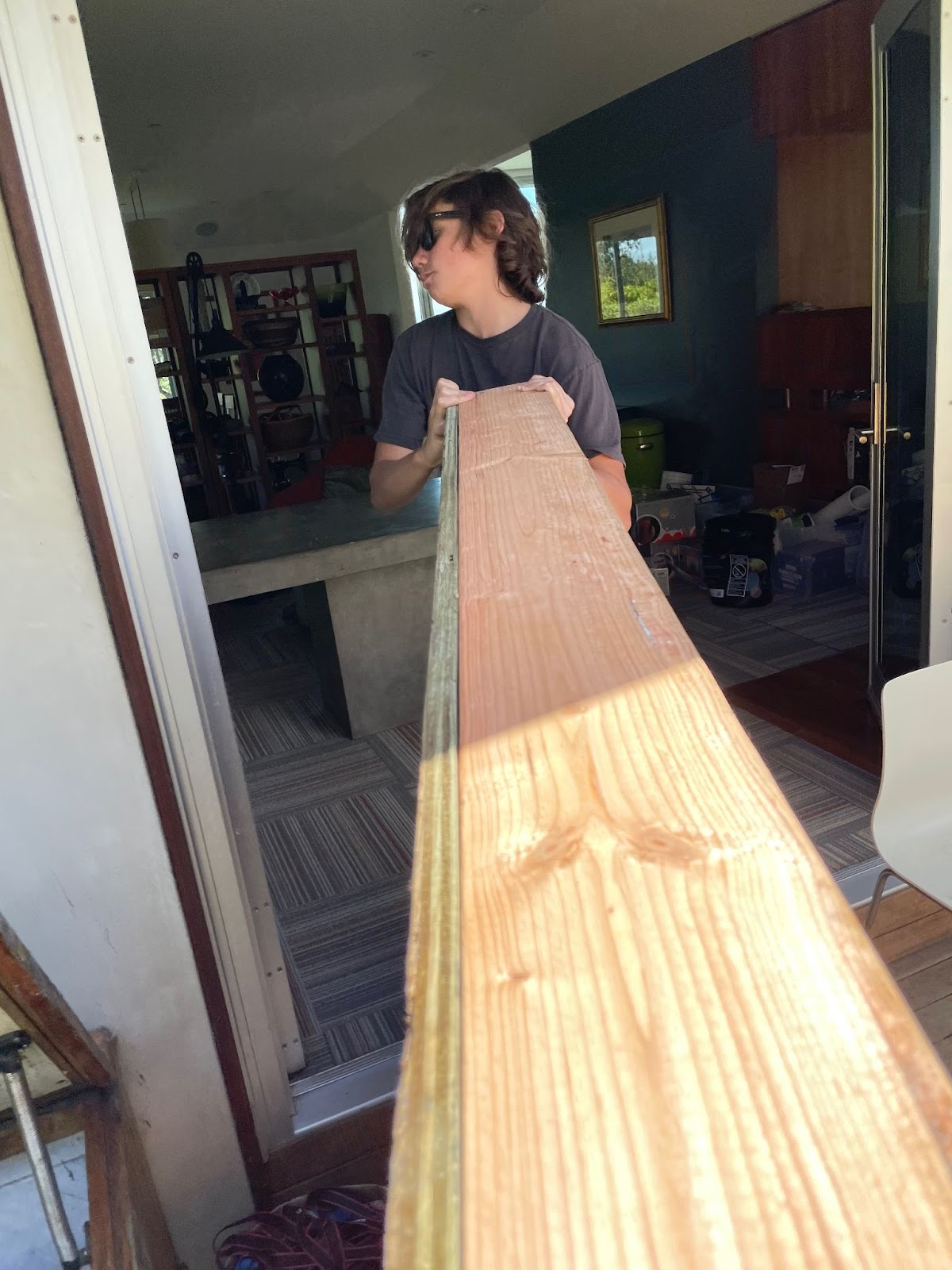
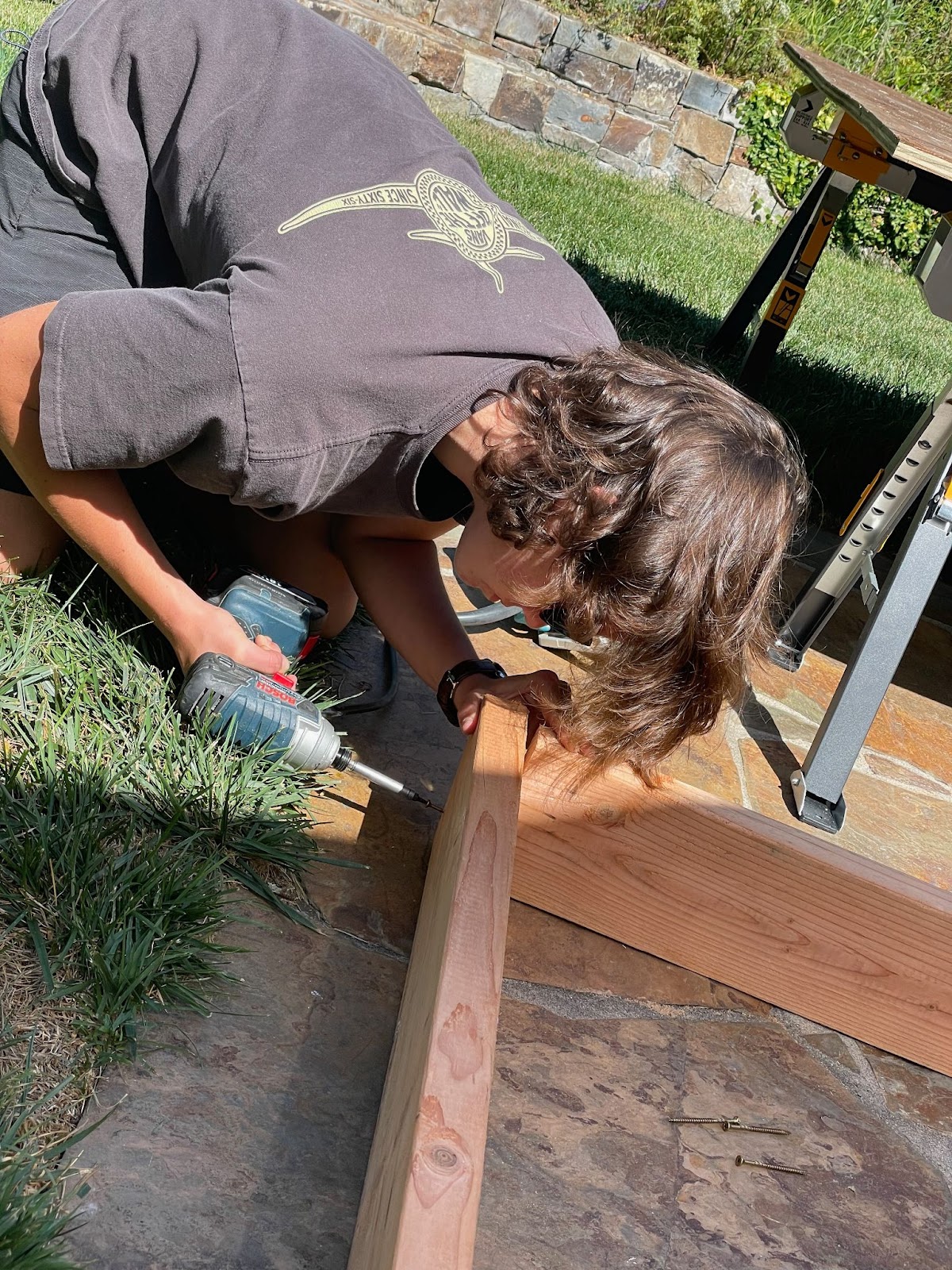
The plywood is the bottom of my homemade wet table. The sides of the wet table are 2×4 planks shown here.
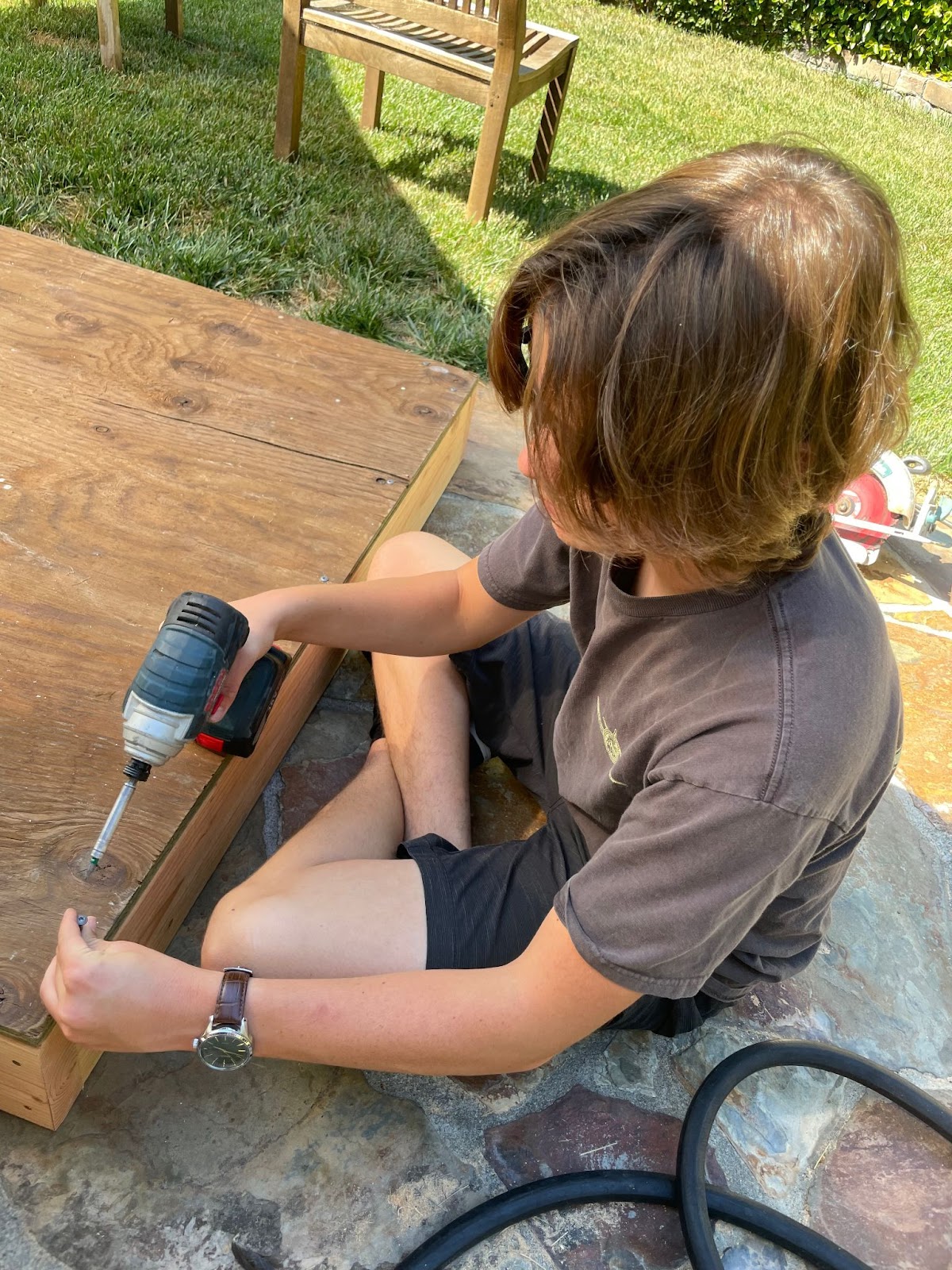
I screwed the plywood to the edges of the wet table.
Then, my dad and I carried the entire heavy structure into the house and placed it on our sturdy concrete crafts table.
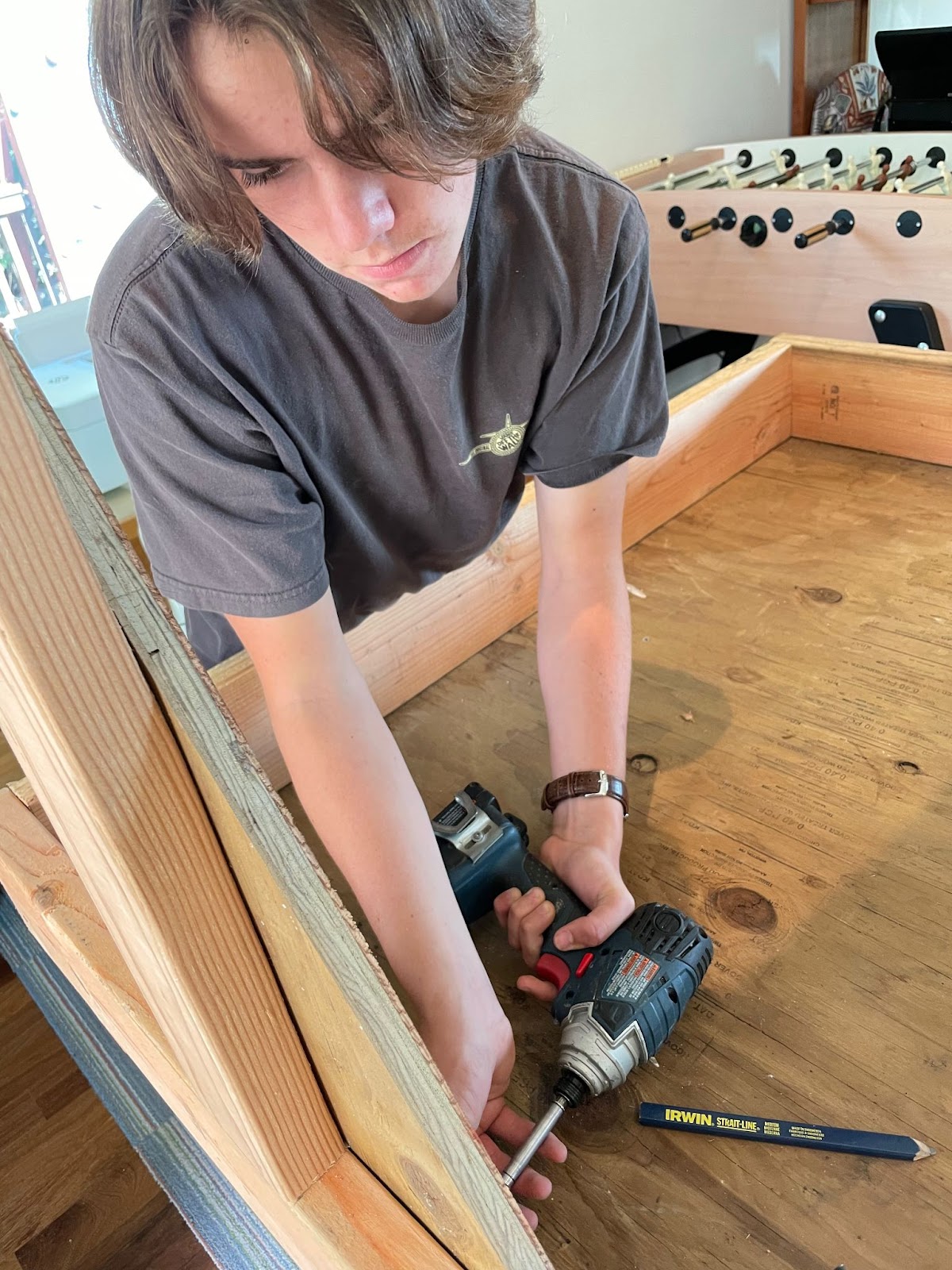
I reinforced the 2×4 ventilation tube support structure with plywood triangles.
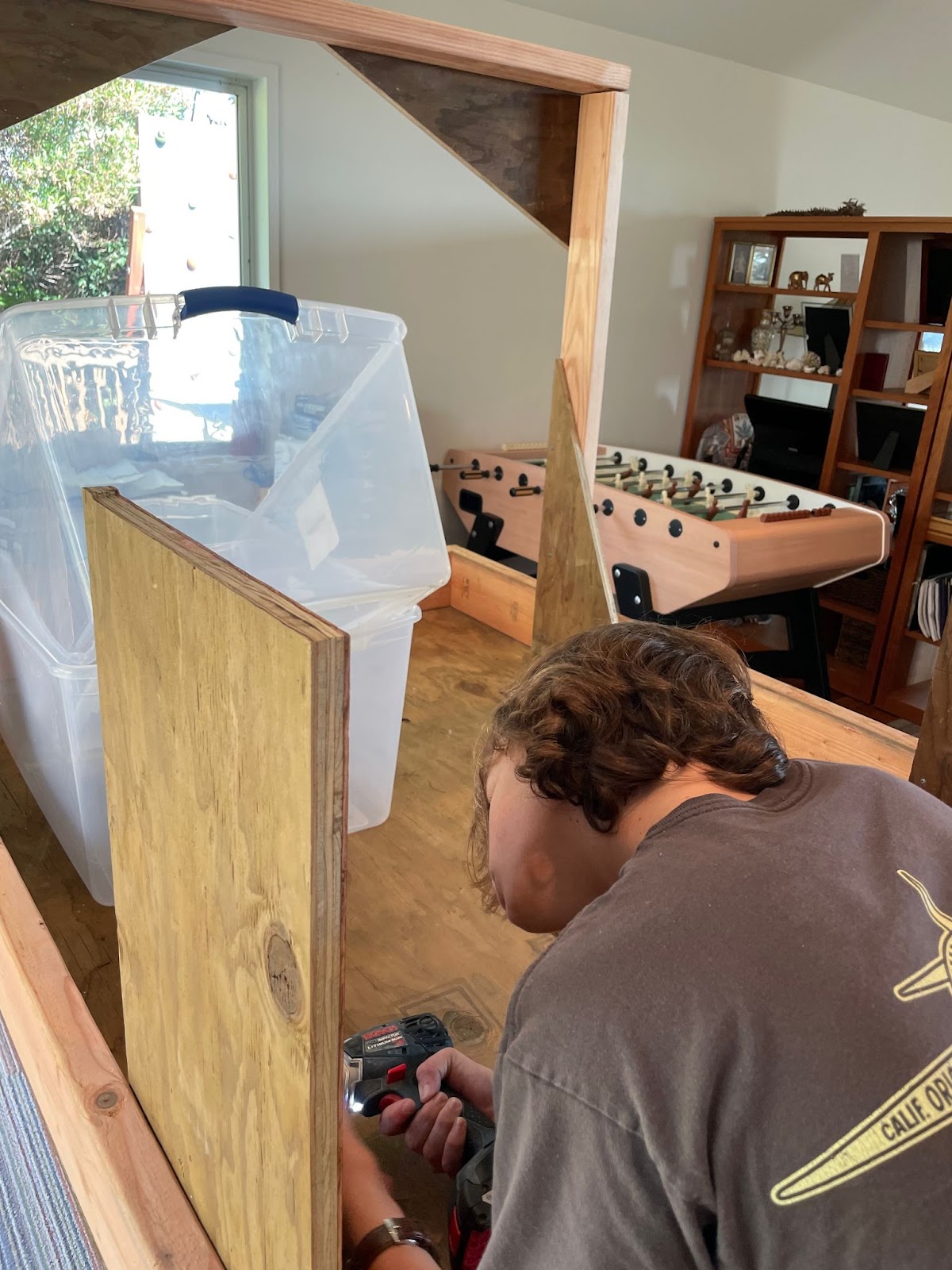
And I attached plywood supports for the high-powered LED reef lights.
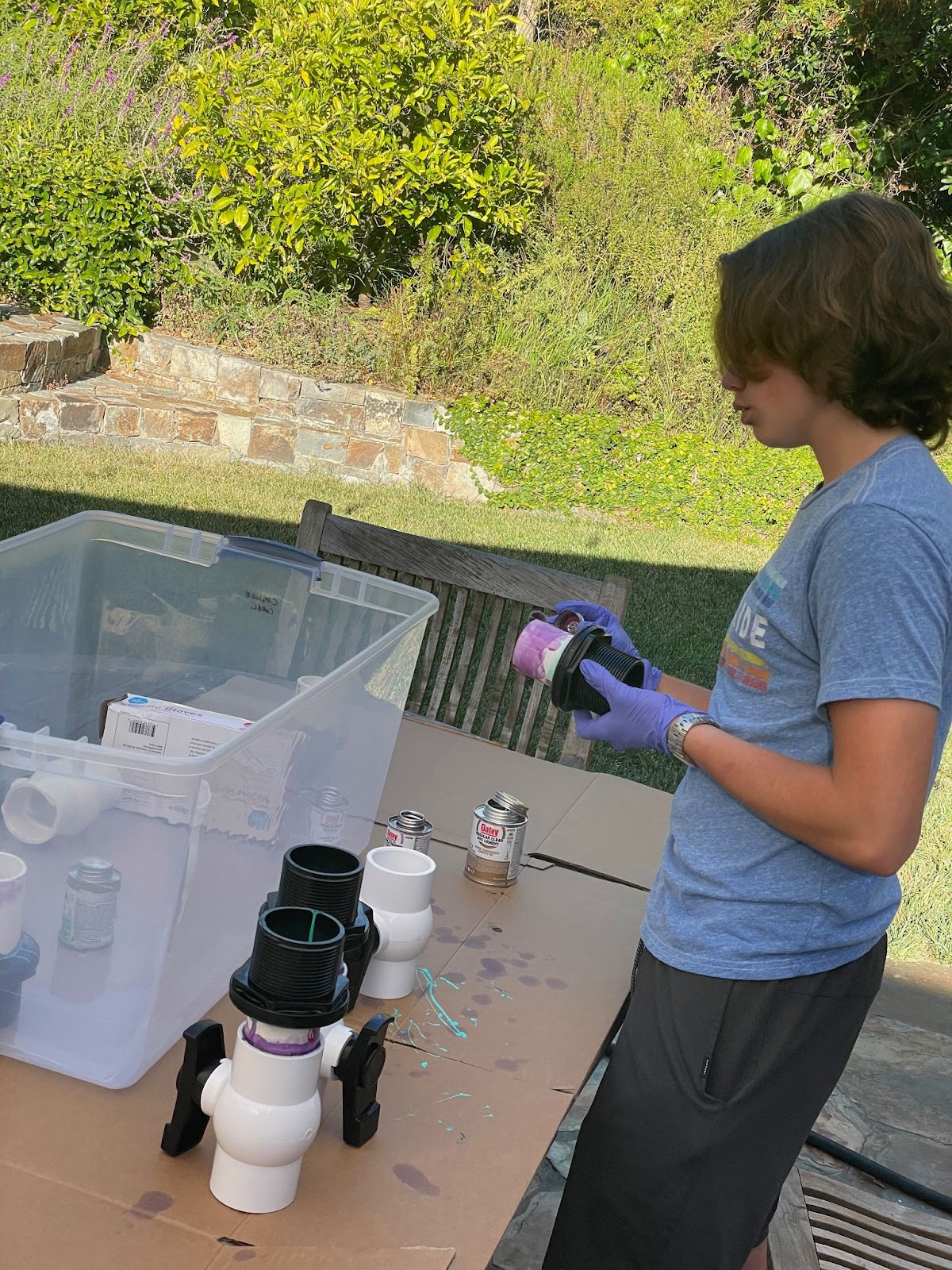
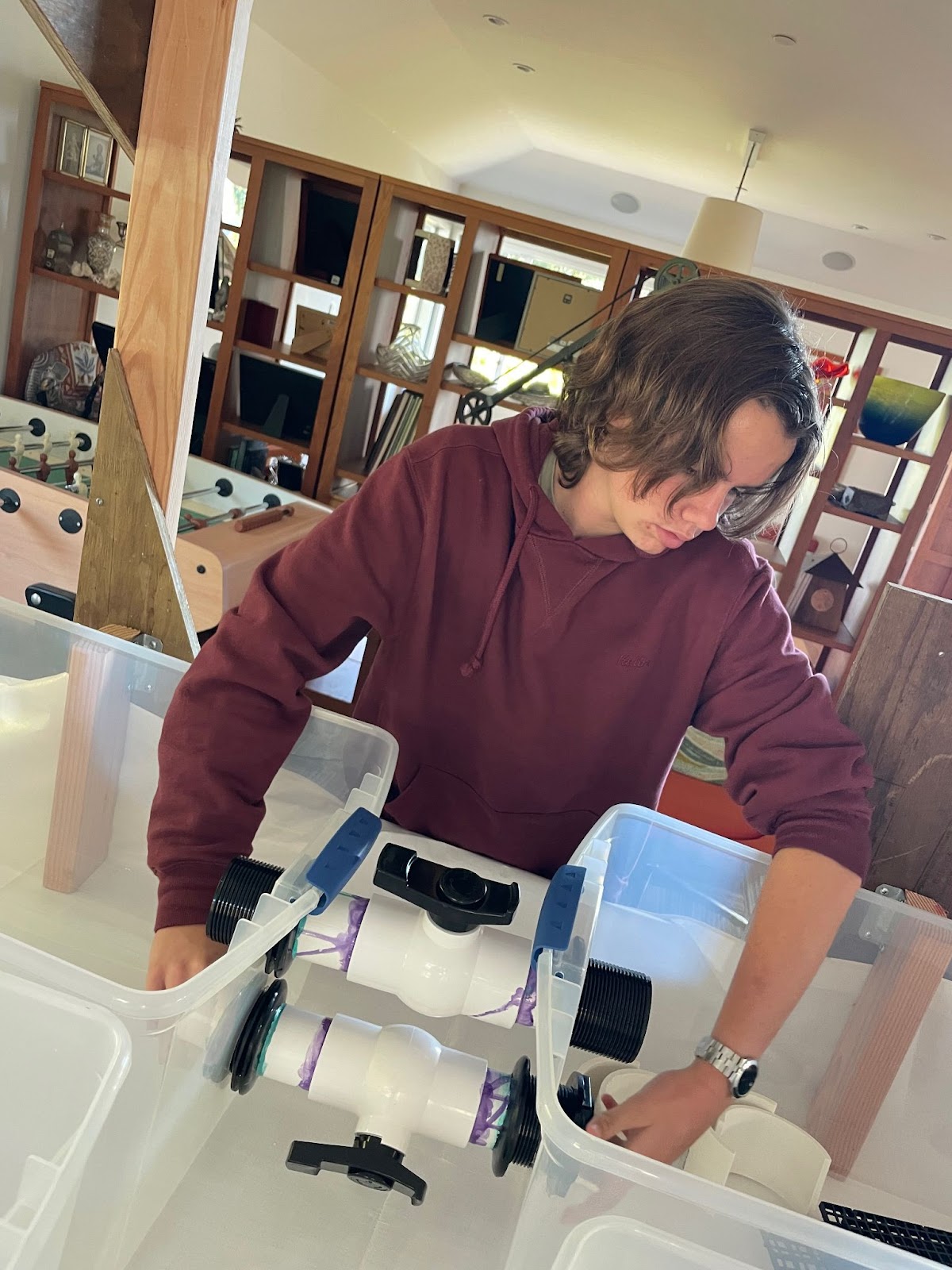
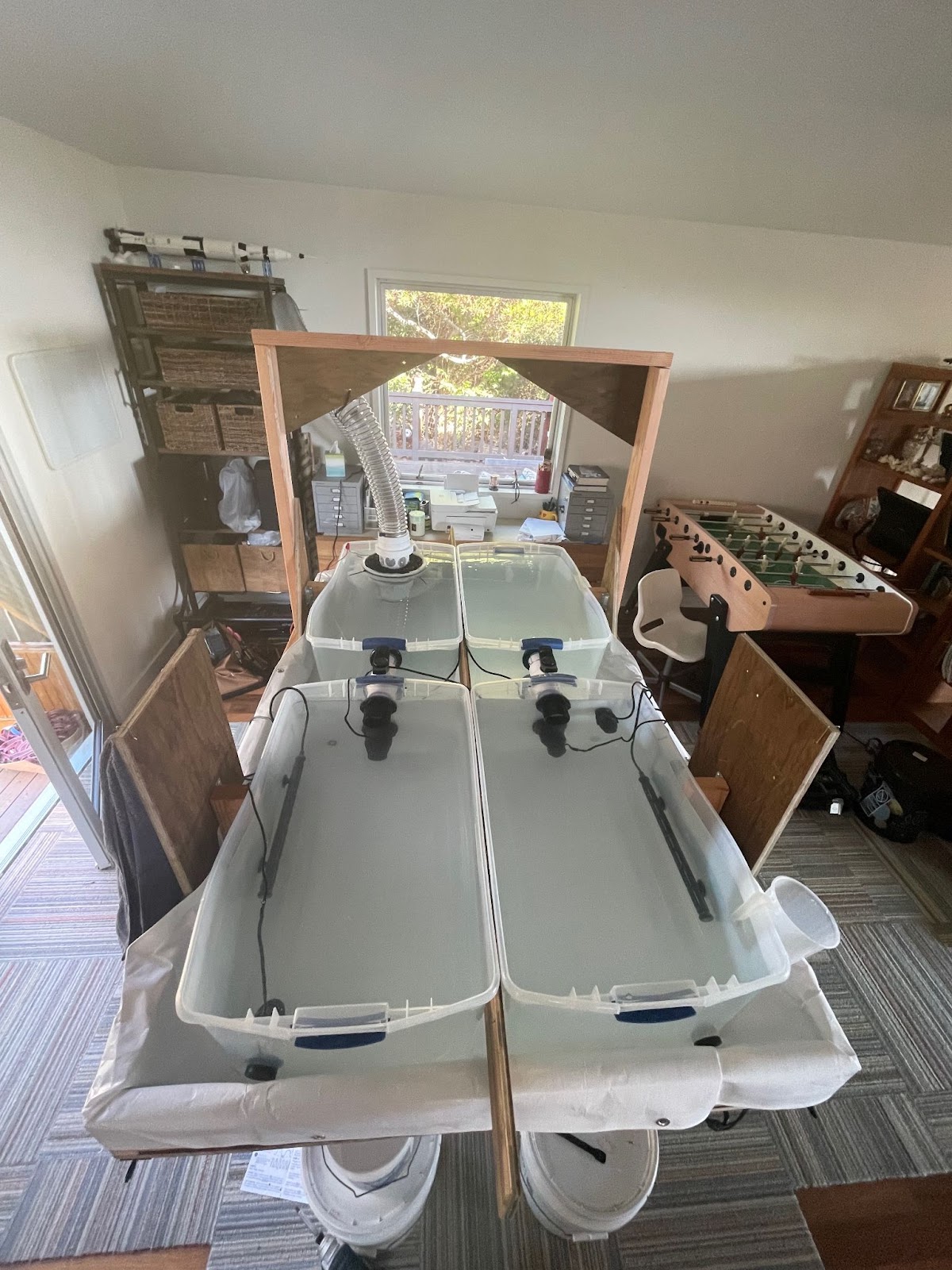
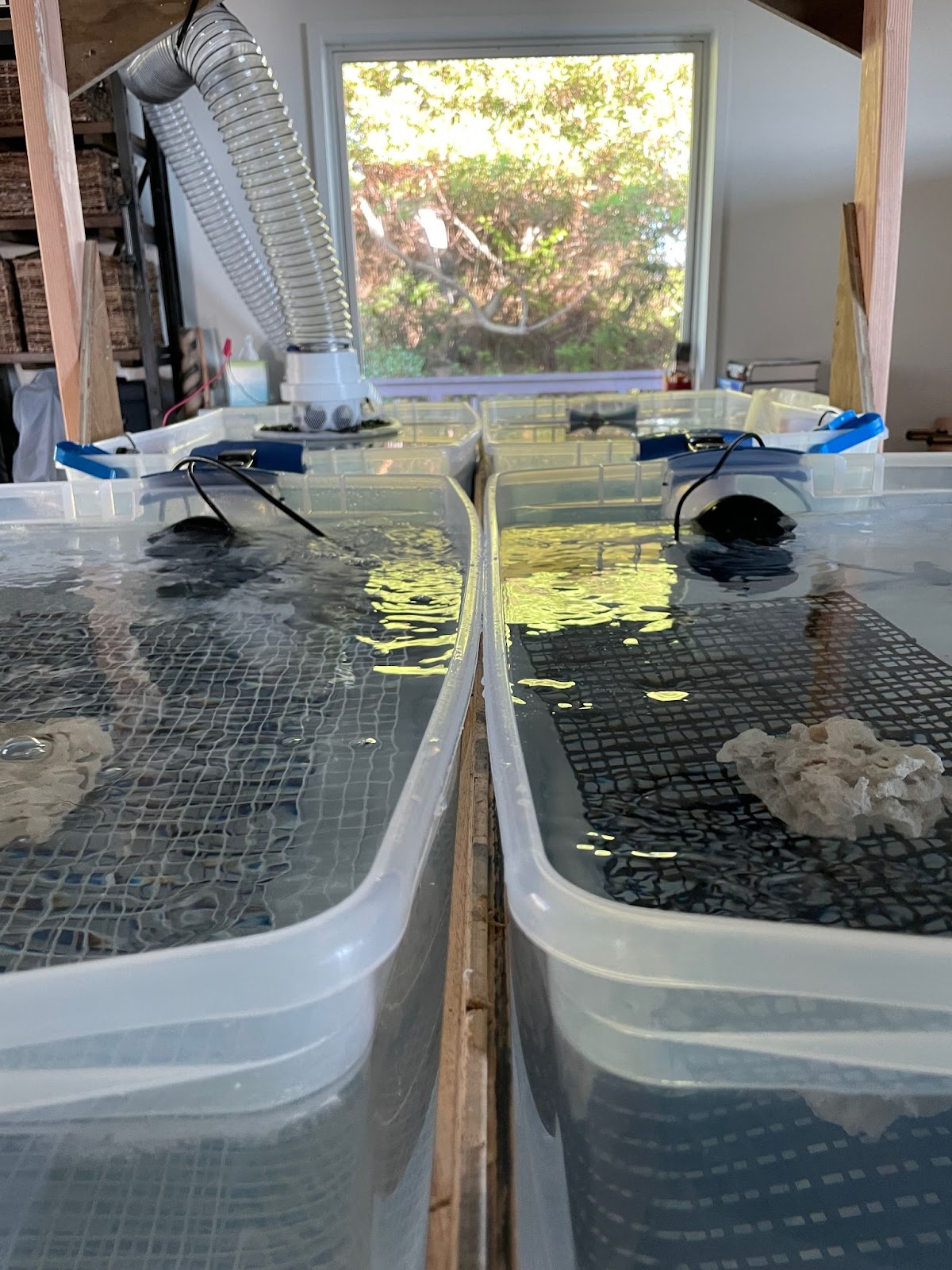
I created the tanks out of two pairs of plastic containers, and connected them with pairs of ABS bulkheads and 3″ PVC pipes and ball valves.
The dual pipes and valves allow water circulation and make it possible to separate the two sides of the tanks for easy water changes and more separation between the anode and cathode in the experimental tank.
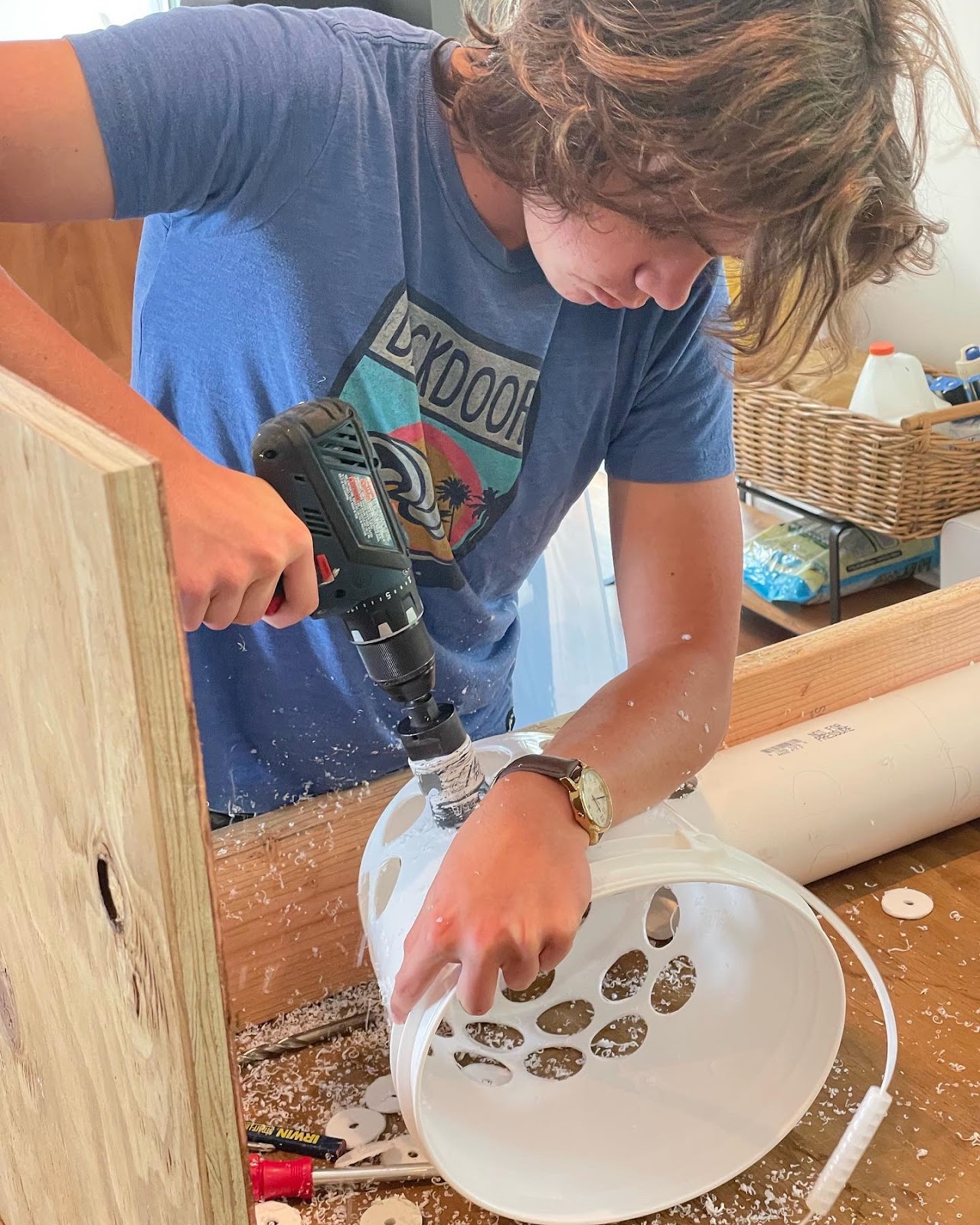
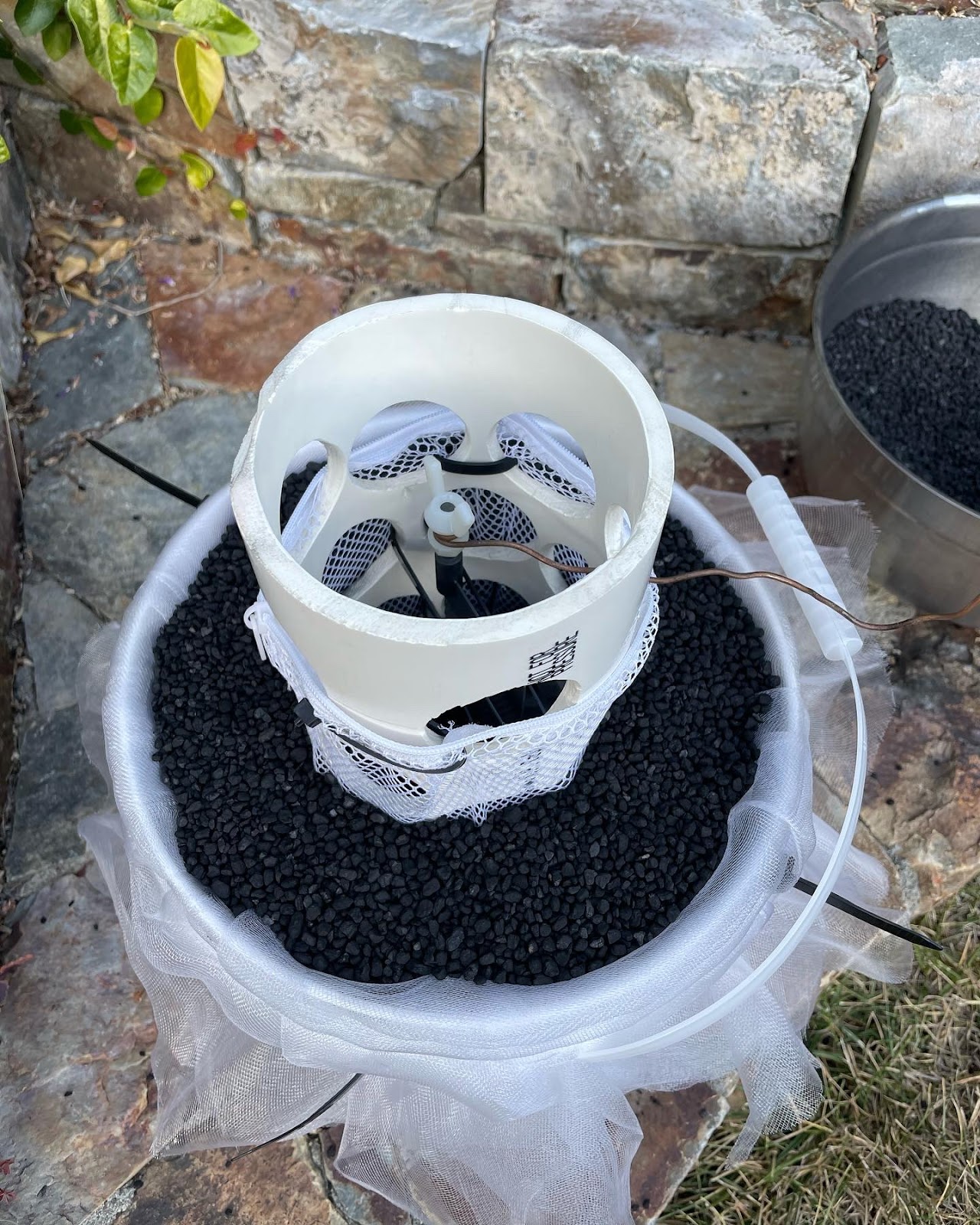
The most critical aspect of the experimental setup is the activated carbon barrier around the anode to protect the aquarium from chlorine and related acids. The outer container is a perforated plastic bucket.
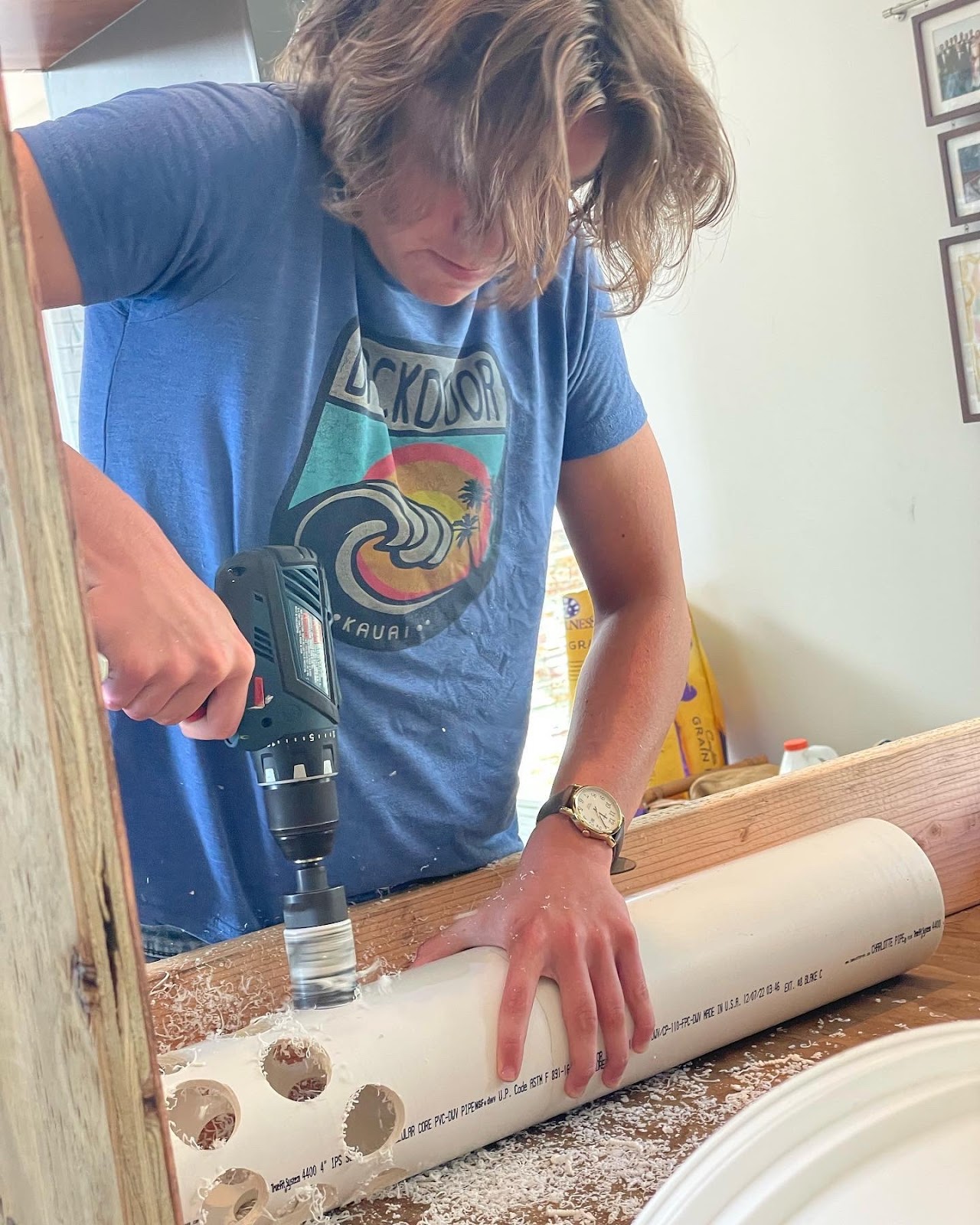
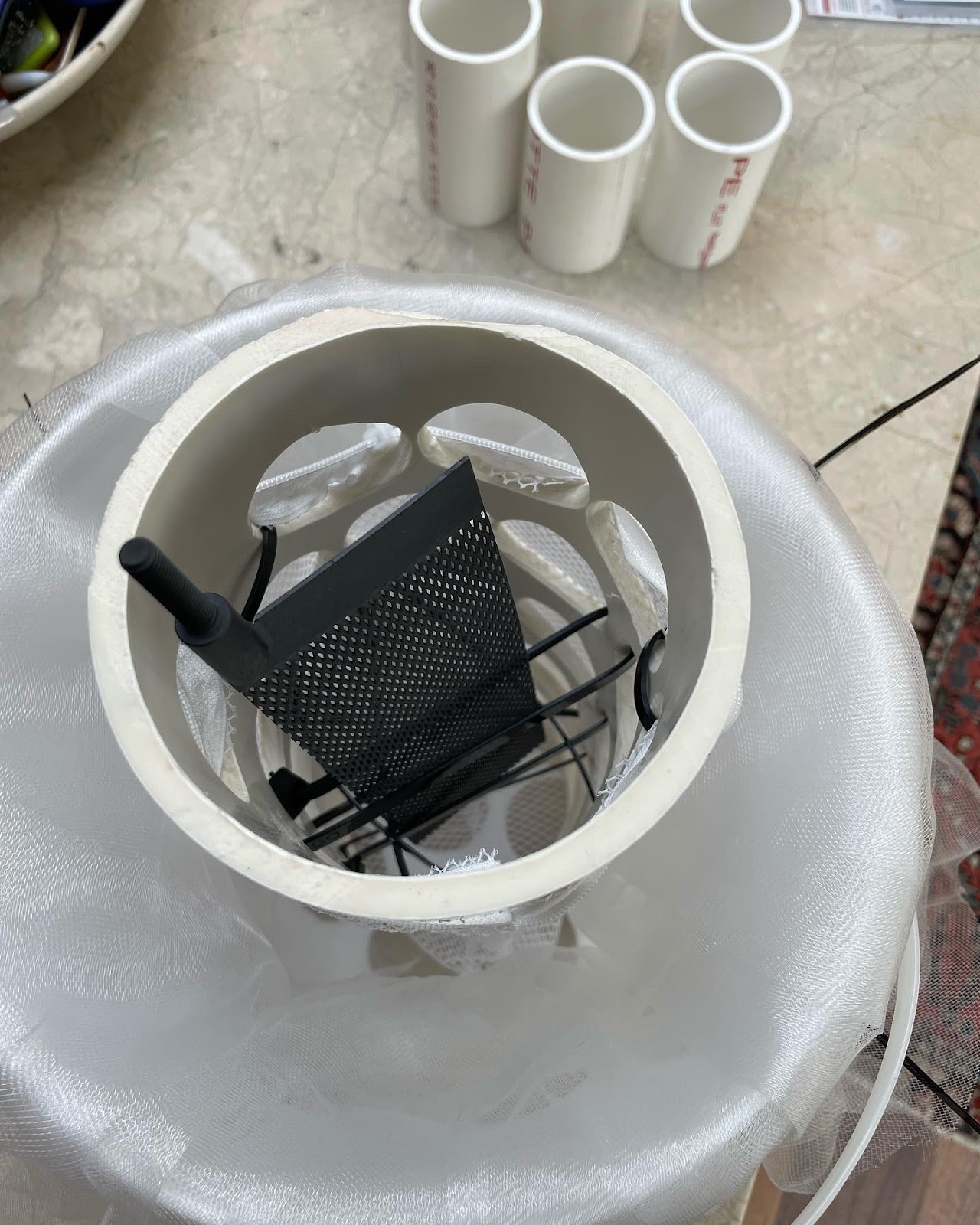
The inner anode chamber is made from a perforated 4″ pvc pipe.
The ruthenium-oxide coated titanium mesh anode is suspended inside the perforated pipe which is wrapped in a mesh bag and then set inside the perforated bucket which is lined with a fine mesh to contain the activated carbon granules.
Here is the finished anode setup with washed carbon granules in place.
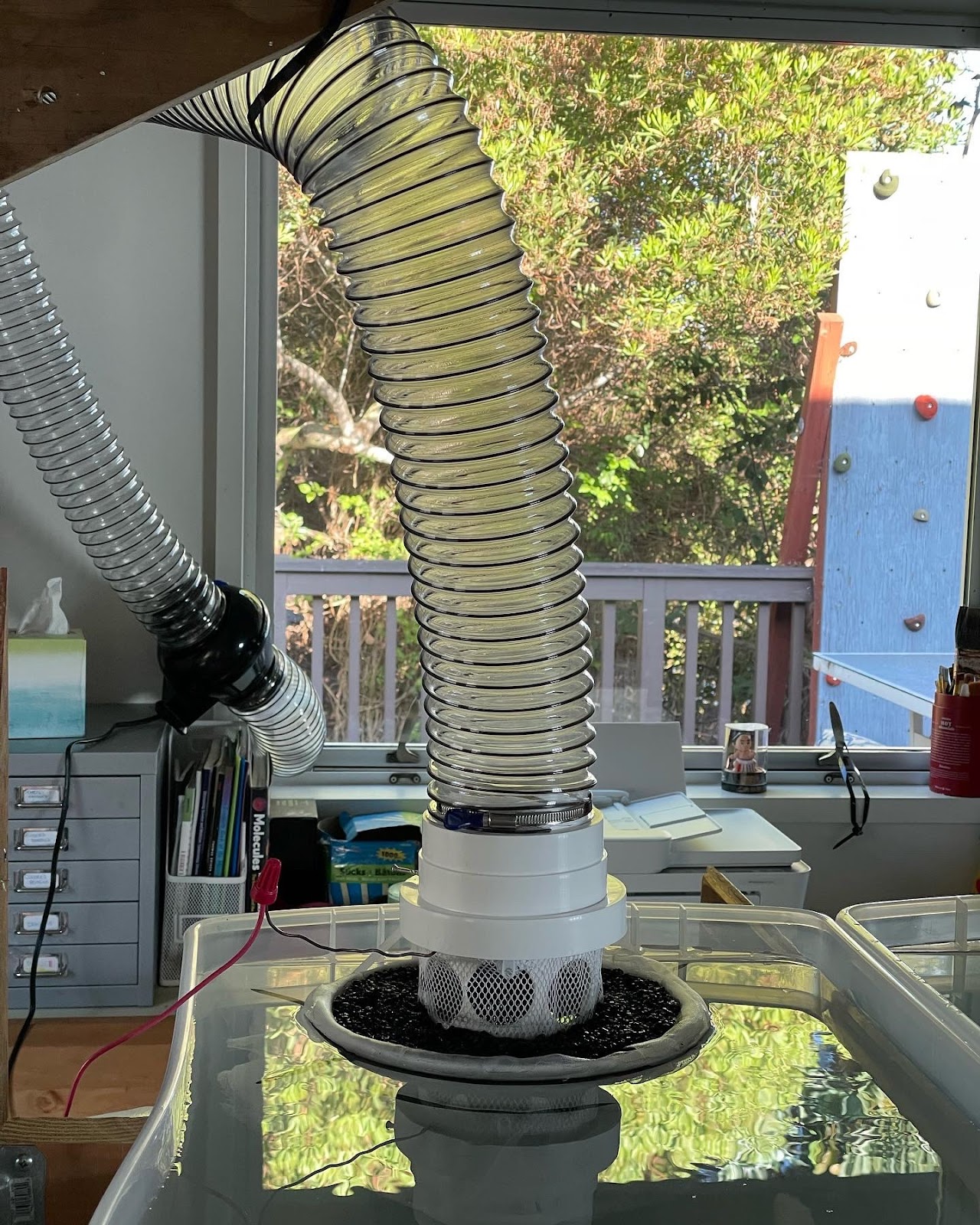
Here is the anode setup in place in the experimental anode tank with the ventilation system attached and venting out the window.
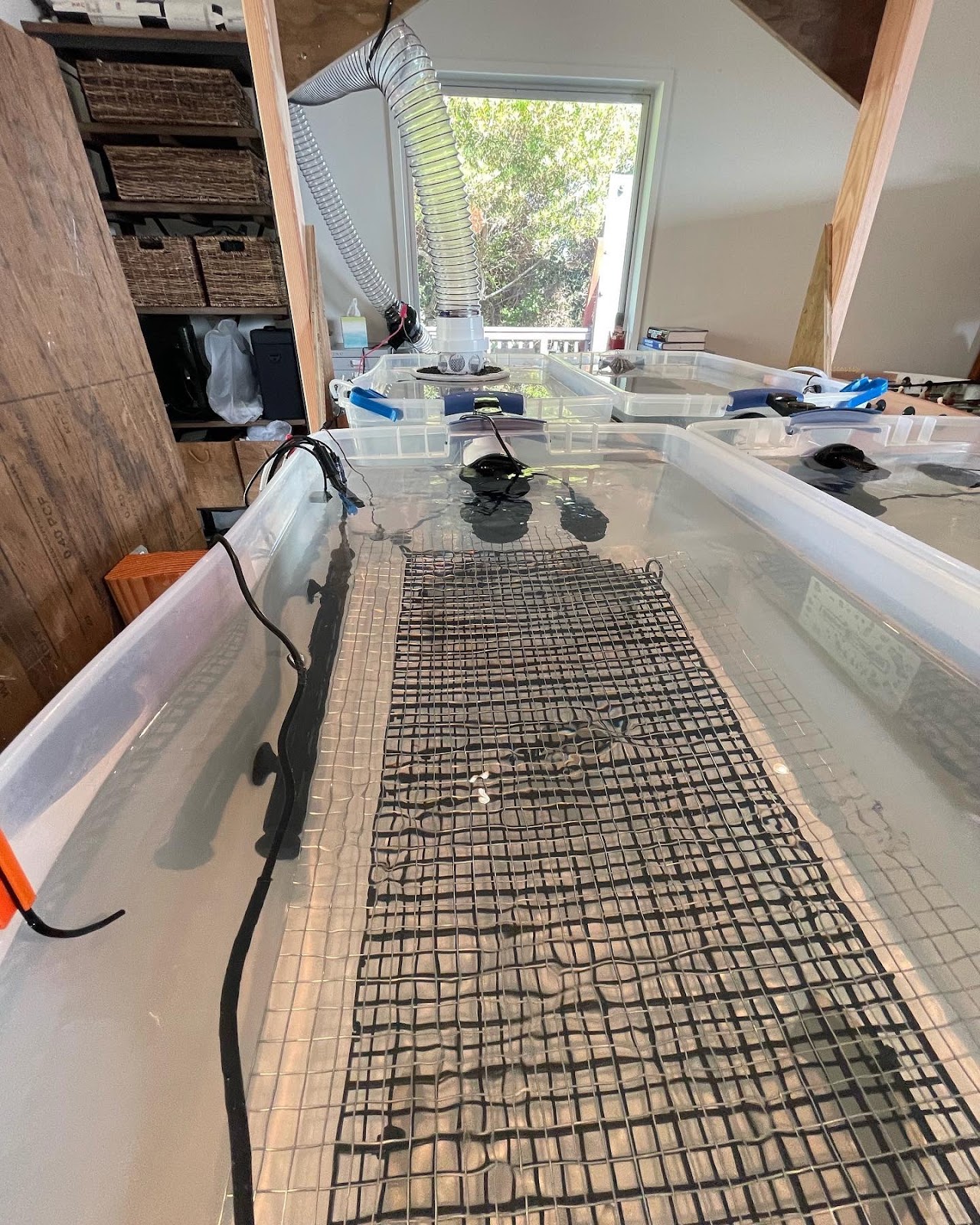
The second leak test was successful! The first required tightening the bulkheads, but the wet table did its job. You can also see titanium heaters (long black tubes on either side of the tanks) and the small flow pumps.
I installed the stainless steel cathode mesh over a plastic supporting grid and attached it to the power supply.
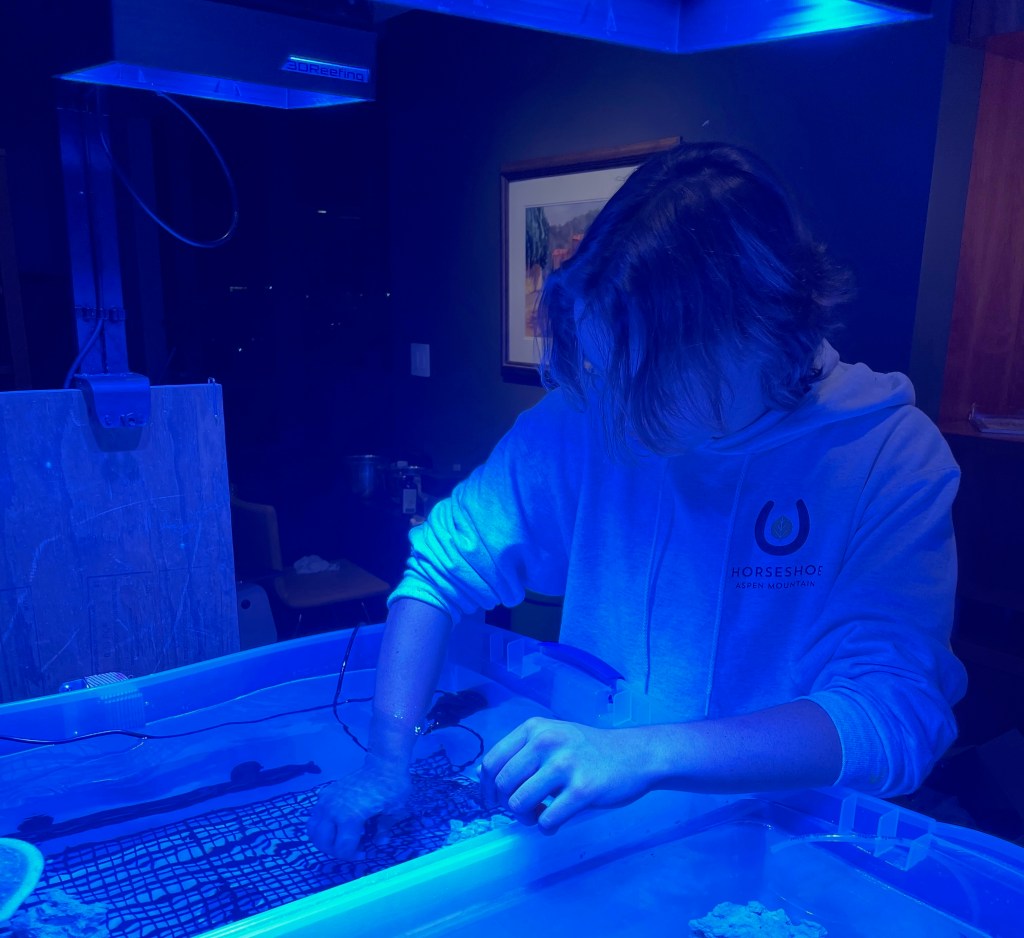
I had to weigh down the coral grids with some rocks to keep the flow circulation pumps from blowing them around.
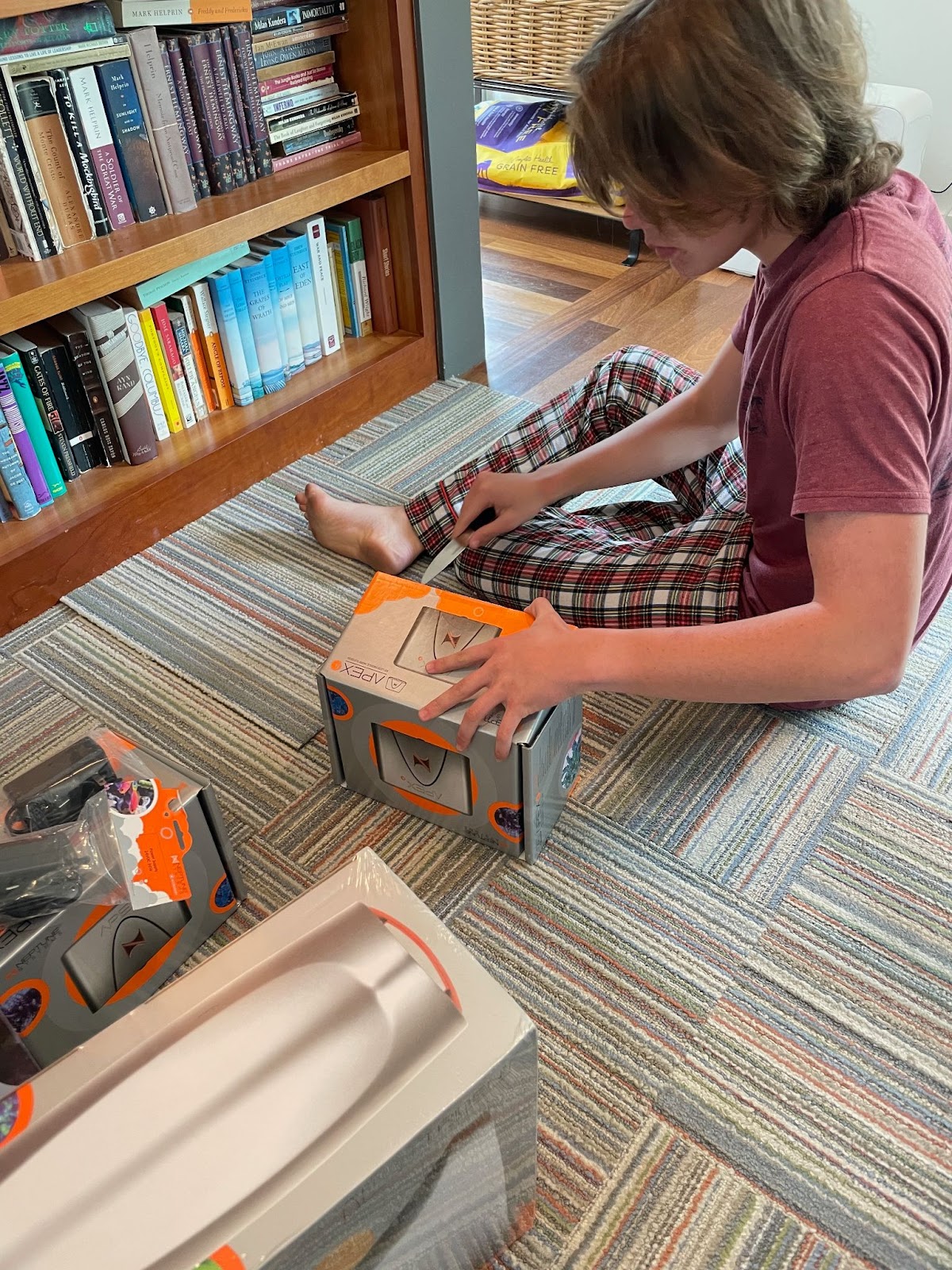
The final big step was setting up the Apex Trident titration colorimeter for testing alkalinity, calcium and magnesium, the Apex Dos dosing pumps for maintaining water chemistry and the Apex Jr programmable controller to automate the testing and dosing and tracking temperature and pH. I also set up automatic top-off pumps to make up for evaporation and keep the water levels steady.
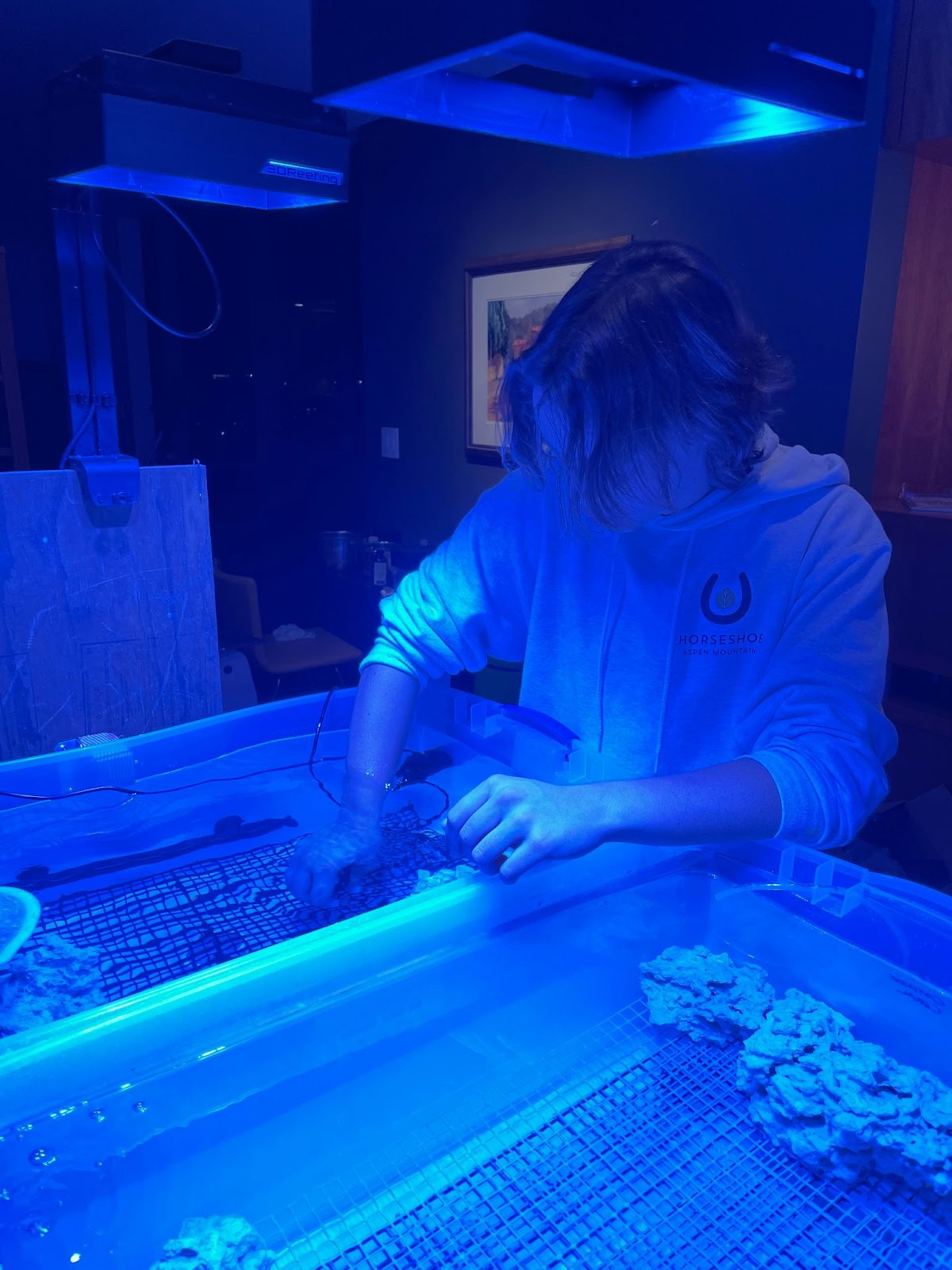
Once the Aqua Illumination Hydra 32 LED coral lights were in place (the blue light makes the corals fluoresce), I put the first four pioneer corals in each tank to give the setup a month-long test run. I used a chalice coral, damicornis, montipora cap and an acropora.
Here is the full experimental apparatus running for the first time!

Comments

Leave a comment