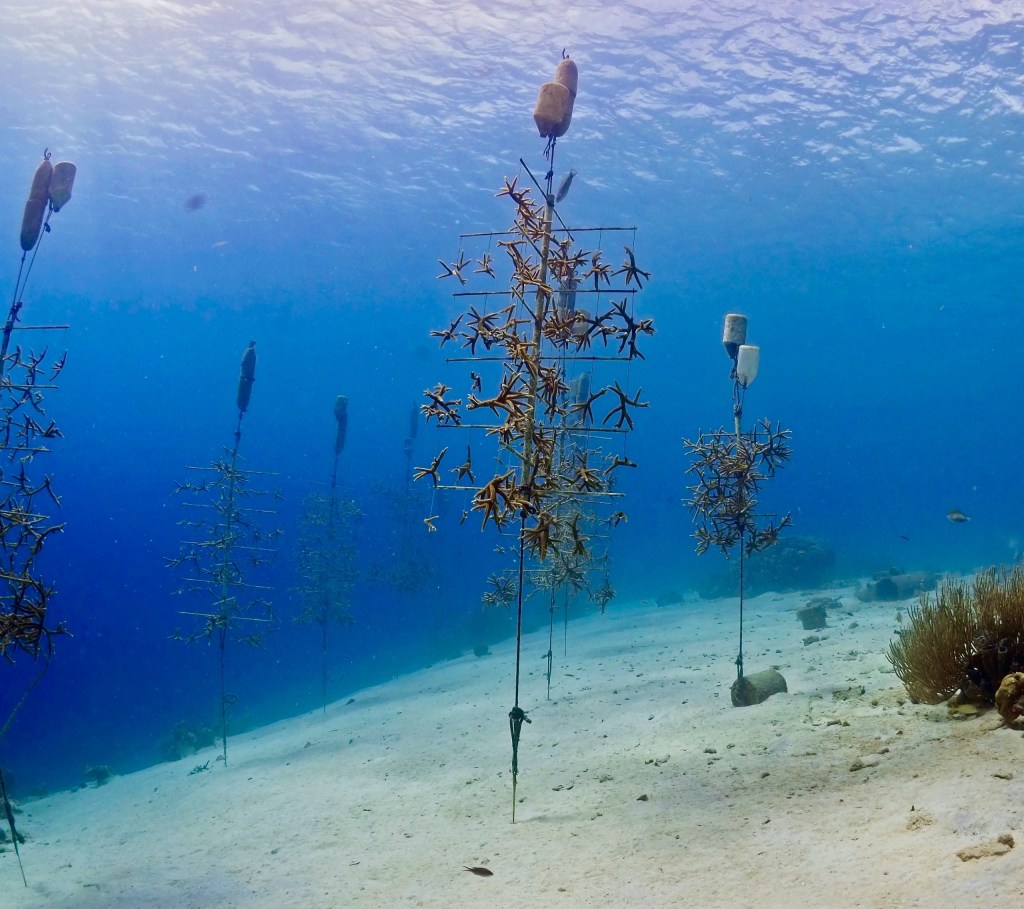
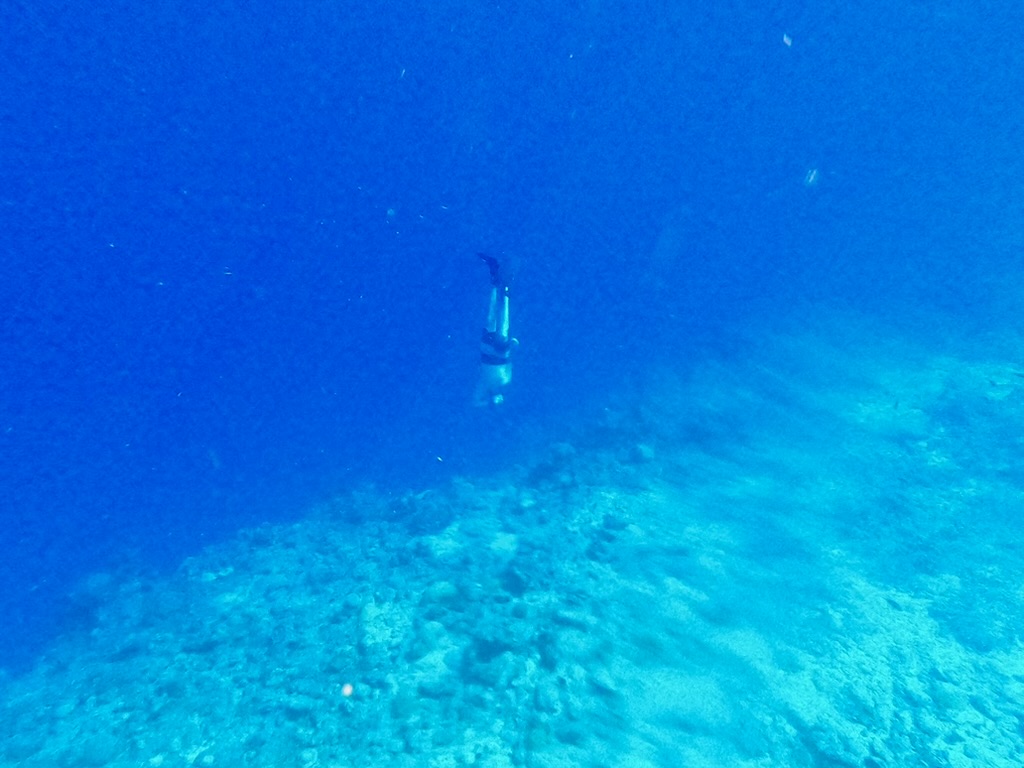
The Caribbean island of Curaçao is a great model for the problems plaguing Caribbean reefs. The reef around Curaçao is known as a barrier reef, which is a reef that closely surrounds the shoreline. Barrier reefs rely on large corals like staghorn and elkhorn to grow and fortify themselves, and healthy reefs are covered in large thickets of those species. Unfortunately, in the past 40 years, those populations have declined by 97%. During my three weeks there with Broadreach at the CARMABI Research Station, the lack of Acropora palmata and Acropora cervicornis was noticeable. The only place where those corals were visible was near the few coral restoration sites.
That absence poses a massive threat to the island’s ecosystem, as those corals are an integral part of the lifecycle of many fish. They provide nurseries to juvenile fish, act as homes to larger fish, and provide food for many species. Those corals are mainly responsible for the growth of the reef, and without them, that growth will stagnate. Unfortunately, their status as critically endangered also negatively affects the people of Curaçao, especially those with homes on the coast. Both elkhorn and staghorn live in very shallow water, acting as a wave break. Without that wave break, tropical storms hit harder with larger waves.
Those corals are not extinct yet, though, and there remains hope that they will return to the reefs in numbers one day. Many groups like Reef Renewal Curaçao are aquaculturing staghorn and elkhorn coral and seeding them on the reef. Those groups have seen more success in recent years as techniques continue to improve, and they are spreading their knowledge through coral reef restoration certifications like the one I received. Hopefully, more efforts to use aquaculture will pop up in future years, but those species may become extinct if they don’t.
 Resilient Reef Research
Leave a comment